Wind Resistance Explained
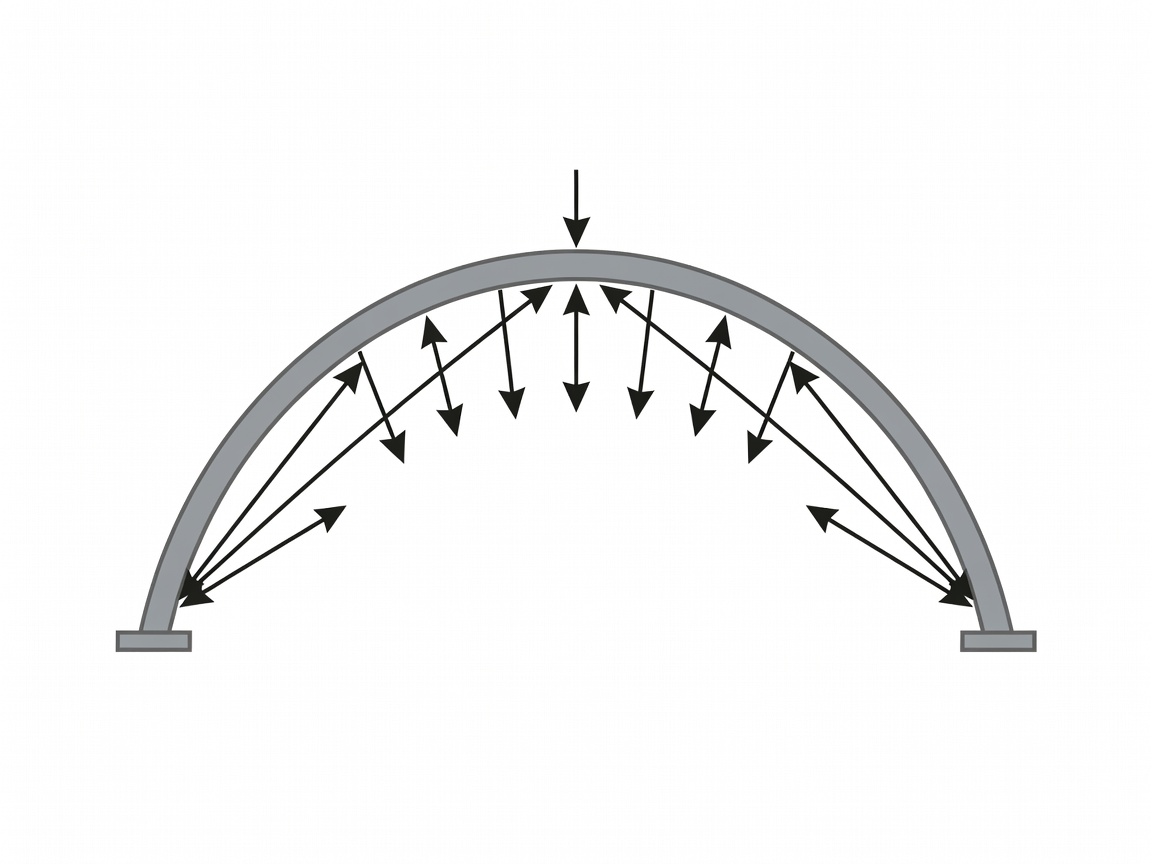
The arch is the ultimate structure for pure compression. By transferring vertical loads laterally down a curved path, the arch utilizes the innate compressive strength of materials like concrete, stone, and rigid steel lattices.
Defeating Wind Shear
For large spans like the Sydney Harbour Bridge, lateral wind forces pose a greater threat than the live load of traffic. The arch must be wider at the base than at the crown to widen its stance, functioning essentially as a spatial truss that channels horizontal wind loads diagonally downward into the foundations.
The True Arch vs. Tied-Arch
A true arch requires immense bedrock abutments to prevent the base from spreading outward under the compressive thrust. Where bedrock is unavailable, engineers use a Tied-Arch (or Bowstring Arch).
The Tie-Chord Tension
In a tied-arch structure, the roadway deck itself is built as a massive tension member connecting the two ends of the arch. As the arch tries to spread outward, the deck pulls back, resolving the internal forces before they reach the foundation.
Resonance Frequencies
Because the arch is exceptionally rigid, its natural resonant frequency is high. Engineers must ensure this frequency does not match the vortex shedding frequency of local wind patterns, often requiring tuned mass dampers in extreme spans.