Structural Secrets of the Golden Gate
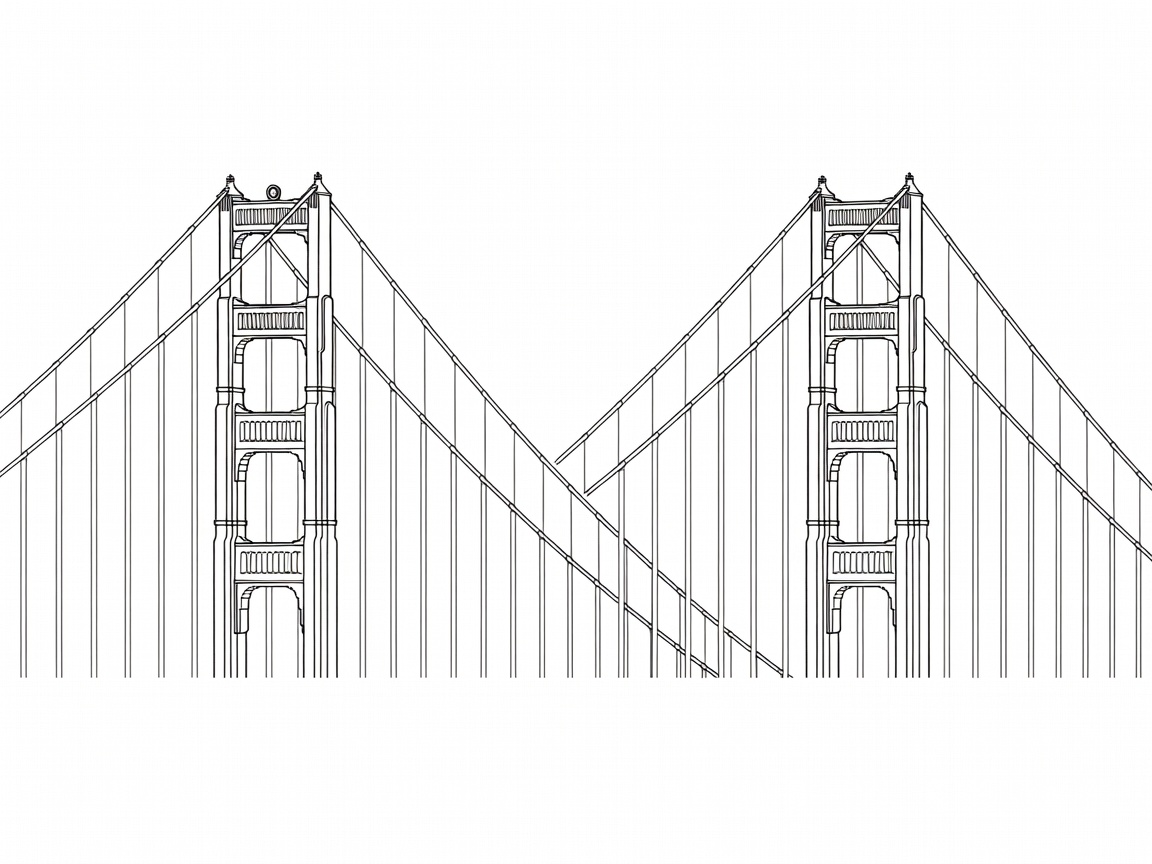
Suspension bridges represent the pinnacle of span engineering, maximizing the tensile strength of steel wire. The fundamental physics involve transferring the massive vertical load of the deck, traffic, and structural dead weight entirely into tension along two or more main cables.
Tension and Compression Nodes
In a suspension bridge, the deck hangs from vertical suspenders, which are strictly under tension. These suspenders pull downward on the main catenary cables. The main cables transfer this tension to the tops of the towers. At the saddle of the towers, the force vector shifts: the vertical component pushes down on the towers (compression), while the horizontal component continues into the anchorages.
Aerodynamic Stability (The Tacoma Lesson)
A bridge is not merely a static structure; it is a dynamic aerodynamic surface. Early suspension designs like the original Tacoma Narrows Bridge failed because they modeled the deck as a solid wing. When crosswinds hit the solid plate girders, they induced aeroelastic flutter—a destructive torsional vibration.
Truss Stiffening
Modern structures utilize an open-web stiffening truss beneath the deck. This allows wind to pass through the structure, disrupting vortex shedding and dramatically reducing the lift and drag coefficients.
Massive Anchorages
The ultimate terminus of the suspension system. The Golden Gate's main cables pull with a force of 61,500 tons each at the anchorages, which are massive blocks of concrete deeply embedded in bedrock, relying on gravity and friction to resist the pull.